

Behind the mask: what masking really costs, and what unmasking really looks like

Updated: Oct 16
Most people have never heard the word masking, and almost everyone is doing some version of it.
Masking is what it sounds like. It is the work of hiding the real you to pass as whatever the room expects. For a person who lives with autism, it can look like forcing eye contact that actually hurts, swallowing a stim that would have brought relief, scripting a conversation in advance, copying other people's faces and tones, and holding all of it together until you finally get to the car. For a lot of us who are neurodivergent in other ways, it looks like performing calm, performing organized, performing fine, while the inside tells a completely different story.
I know it from both sides. I am the parent of a neurodivergent child, and I spent most of my own life neurodivergent without knowing it, called too much and not enough in the same breath until I finally had language for it at 42. I have watched someone I love work to look like everyone else, and I have done the exact same thing, in my own way, for decades.
Here is the part that does not get said enough. Masking works. That is the cruel thing about it. It helps you fit in, avoid the comment, keep the job, get through the dinner. It costs you almost everything underneath.
What masking costs
The cost is exhaustion, the bone-deep kind, because pretending to be someone else is a full-time job with no breaks. The cost is anxiety and low mood, because some part of you knows the version people are clapping for is not really you. The cost is a slow loss of self, until one day you cannot answer a simple question like "what do you actually like?" because you have spent so long reading the room that you stopped checking in with yourself. The research on this is blunt. People who mask the most tend to struggle the most underneath, with higher rates of anxiety, depression, and burnout, and for people who live with autism, masking is linked to real risk to mental health and even to life. This is not vanity. It is survival that quietly turns on the person doing it.
Why women and girls get missed
There is a reason this lands so hard on women and girls. For a long time, autism was studied mostly in boys, so the checklists and the assessments got built around how it tends to show up in boys. Girls and women often present differently, and they tend to mask earlier and more skillfully, partly because girls get the message young to blend in rather than stand out. The very thing that should raise a flag, the exhausting work of fitting in, is the thing that hides them in plain sight.
Many women get handed a diagnosis of anxiety or depression years before anyone thinks to ask about autism. By the time they get an answer, if they ever get one, they have often spent decades wondering why everything that looks easy for other people costs them so much. I was in my forties before I had language for my own wiring. The better you get at hiding it, the less likely anyone is to ask if you are okay.
That is what the mask is for. The not-looking-like-it is not proof that nothing is hard. Often it is proof of how hard someone is working so that you will not see.
What does unmasking actually look like?
What does unmasking actually look like? It is quieter and slower than people expect, and it is not a dramatic reveal where you walk into the world as your whole self overnight. It starts with safety, with one person or one room where you do not have to perform. It looks like letting the stim happen because it helps. Saying "I need a minute" instead of pushing through. Keeping the headphones on. Leaving the party early without a paragraph of apology. Answering "what do you actually want?" and sitting with the silence until something true comes up.
It can feel terrifying at first, because your nervous system learned a long time ago that the mask kept you safe, and taking it off can feel like standing in a room with no clothes on. That fear is not a sign you are doing it wrong. It tells you how long you have been holding it up. You do not unmask everywhere at once, and you do not have to. You build a few safe places where the mask comes off, and you let those places slowly grow.
If you are a parent
If you are a parent, here is something I wish more people understood. A child who holds it together all day and then comes apart the moment they walk through your door is not getting worse with you. They are safest with you. The mask tends to come off where it is safe, and home is usually that place.
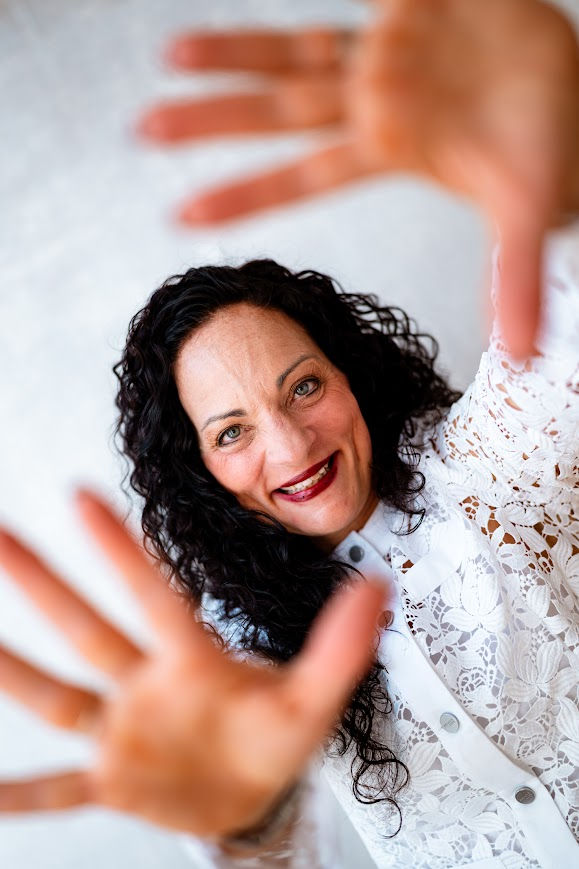
For me, the road back to myself started in rooms where I did not have to translate. That is a lot of what therapy can be, a place where you get to take the mask off and find out who has been underneath it the whole time. If you are tired in a way that sleep does not touch, and you cannot remember the last time you felt like yourself, you might not need more discipline. You might just need somewhere safe to set it down. A Java Chat is one place to start: fifteen free minutes, bring your coffee, and you do not have to perform anything to be there. You just come as you are.
If you are in crisis, call or text 9-8-8, the Suicide Crisis Helpline, any time.
Keep reading: signs of ADHD in women · feeling sad after a late ADHD diagnosis


